
Understanding the 4 Key NDIS Support Roles: Who Does What and When You Need Them
Navigating the NDIS can feel overwhelming — especially when you’re trying to understand who does what and who you should go to for help. The good news? You’re not meant to do it alone. The NDIS is built on a team of roles designed to support participants at every stage of the journey.
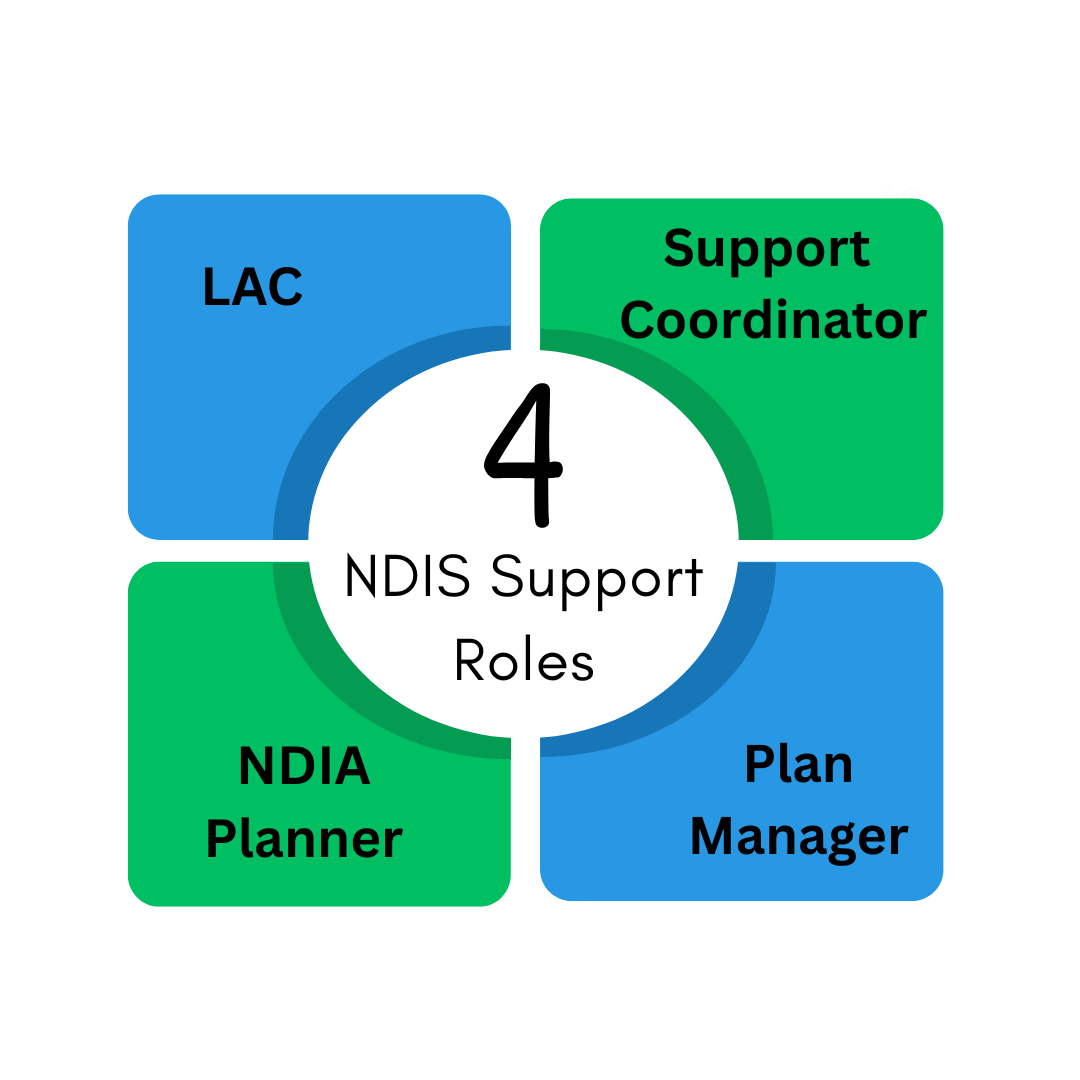
In this guide, we break down the four key NDIS roles you’ll come across: Local Area Coordinators (LACs), Support Coordinators, NDIA Planners, and Plan Managers.
We’ll also explain exactly when you might need each one.
Local Area Coordinator (LAC)
Your first stop for understanding the NDIS
A Local Area Coordinator helps you get started with the NDIS. They’re often the first person you sit down with to talk through your situation, your support needs, and your goals.
LACs help you with:
Understanding how the NDIS works
Preparing for your planning meeting
Connecting you to mainstream and community supports
Checking in with you during your plan period
LACs are great for people who need help getting clarity around their plan or linking to community services beyond the NDIS.
You need an LAC when:
👉 You want support understanding your NDIS plan or finding local community options.
Support Coordinator
Your partner in putting your plan into action
If your NDIS plan includes Support Coordination, you’ll work with a Support Coordinator to help you use your plan effectively.
They act as a guide, helping you find the right services, build your capacity, and make sure your supports work together.
Support Coordinators help you with:
Connecting with service providers
Understanding and implementing your plan
Coordinating and organising your supports
Building confidence and independence
They’re especially helpful for participants with more complex needs or multiple supports to manage.
You need a Support Coordinator when:
👉 You need help choosing, organising, or managing your services.
NDIA Planner
The decision-maker behind your plan
Your NDIA Planner (or Planning Officer) works for the National Disability Insurance Agency. They’re responsible for building your plan and making decisions about what reasonable and necessary supports are funded.
NDIA Planners help you with:
Running your planning or plan review meeting
Reviewing reports and goals
Approving your funding
Making changes to your plan when needed
While you don’t work with your Planner every day, they play a key role in making sure your plan reflects your needs.
You need an NDIA Planner when:
👉 You’re having your plan approved, reviewed, or updated.
Plan Manager
Your financial support team (that’s where we come in!)
A Plan Manager takes care of all the financial and administrative side of your plan. For many participants, having a Plan Manager makes the NDIS less stressful and more flexible — especially because it allows you to choose both registered and unregistered providers.
Plan Managers help you with:
Paying invoices on your behalf
Keeping track of your budgets
Sending monthly statements
Helping you understand how much funding you have left
Ensuring providers charge correctly – by adhering to the NDIS Price Guide
Making your plan easier to manage day-to-day
At Pacific Plan Management, we focus on fast payments, clear communication, and making your NDIS experience as simple as possible.
You need a Plan Manager when:
👉 You want help managing NDIS funding, paying providers, or staying on top of your budget.
So… Who Do You Go to for What?
Here's a quick guide:
Need help understanding your plan? → LAC
Need help choosing or coordinating services? → Support Coordinator
Need your plan approved or reviewed? → NDIA Planner
Need help paying providers and managing budgets? → Plan Manager
Understanding the different NDIS roles can make your journey smoother and less confusing. Each role has a unique purpose — and together, they form a support network designed to help you achieve your goals.